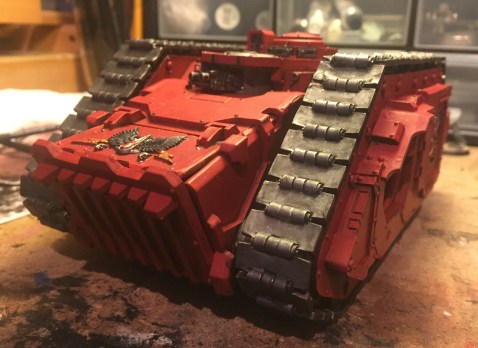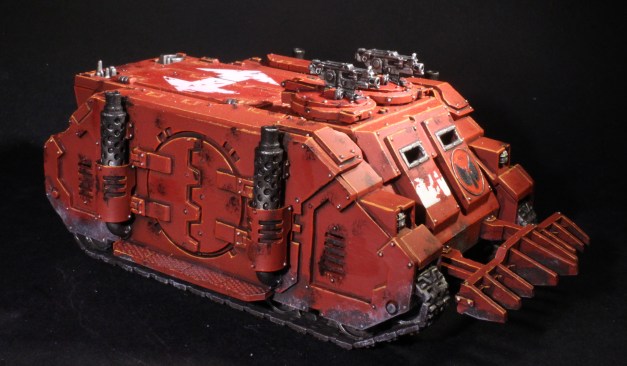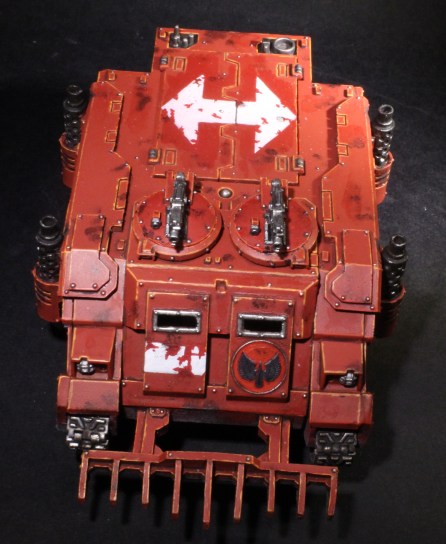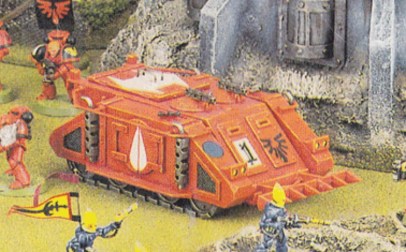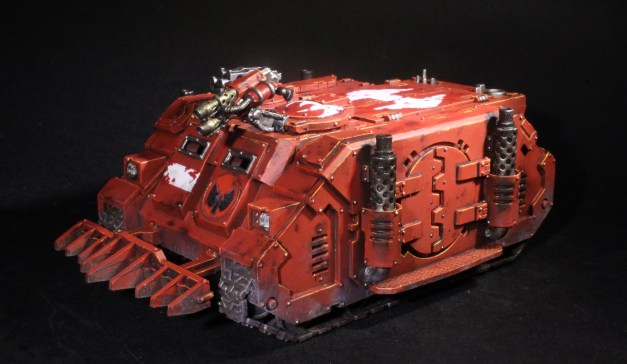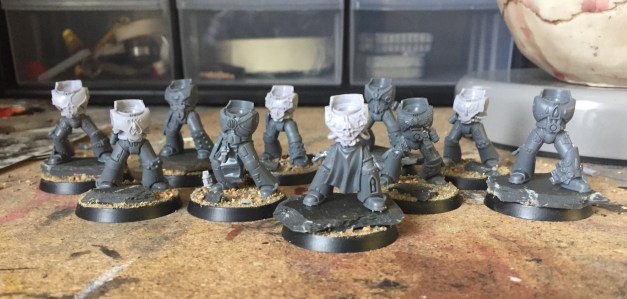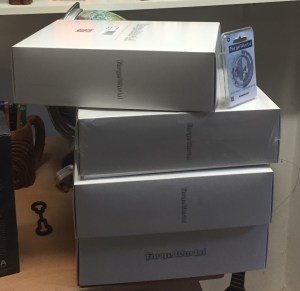


As it’s going to take me a little while to get this finished, and as a nice Friday treat, I thought I’d share with you a couple of images of my latest project – A Spartan for my IXth Legion. Here it is in very little of its glory:

Thankfully, a lot of the leg work is done here. All the base coats are on, and the silver areas, and the top of the hull, have all seen some wash, but boy did it take some effort to get to this point. You know when you get a perfect storm of issues that lead to a project being a lot less fun than it ought to be? Well, that’s what I’ve been going through with this.
It started on Boxing Day (26th of Dec for those who don’t box), when I put this kit together. I was hungover and grumpy from a lot of festive celebrations so I was less than caring when assembling things. Entirely my own stupid fault, and I have plenty of regrets. It’s a gorgeous kit, and I owed it more TLC during assembly. But I will forever be reminded of this as there’s a little bit of wonkiness running through everything. Not overly noticeable to most (I hope) but I’ll know. There are also a lot of mould lines that I have spent a lot of time removing and this thing is now more green stuff than resin in some places, and some of the lines are still there. Weathering will save the day in the end, I’m sure.

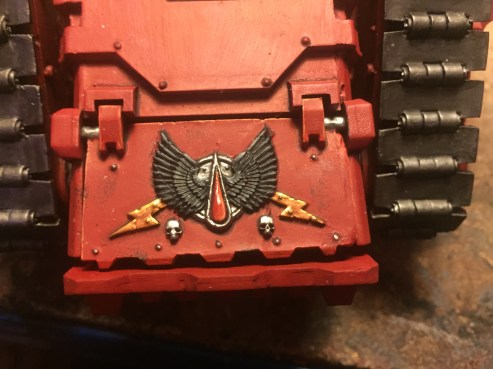
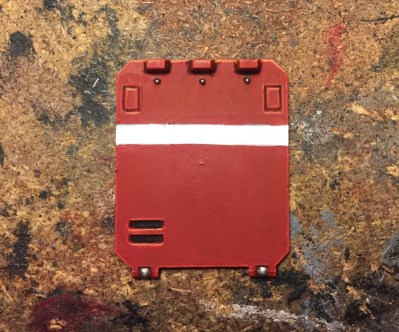
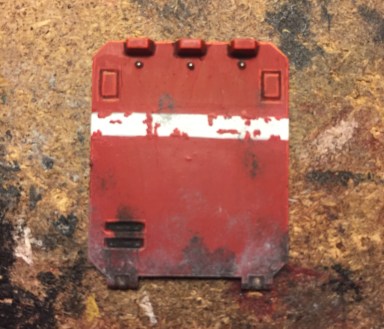
I wanted to get one bit of it finished just to have some sense of true accomplishment, and so I have done the upper front door, which is one of the Forge World upgrades meant for Land Raiders. This is ever so slightly wonky, as it was a tad too thin and so I had to add a couple of millimetres of green stuff down one side. But that is literally the one bit that is done. All the rest of the tank is still to do and it’s going to take a while. I haven’t even built the guns yet!
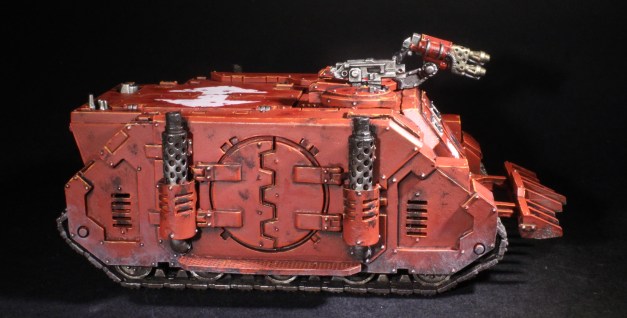
So this is what will be keeping me busy for the foreseeable future. And speaking of those guns, they’ve come in classic curly FW styling so they’ll be getting a dunking in boiling water before I even start with those. But yeah, it’s a beast. A huge kit that will be fun, but I am realising more and more that I do prefer working on smaller miniatures. I don’t mean epic scale or anything like that – but I get a lot more enjoyment out of working on a single character than a big tank. I’ll still enjoy the tank, but I’ll enjoy painting a single dude a lot more. It’s important to learn these things about oneself.
There you have it then. That’s what I’ll be struggling through, and you will see the completed monster here soon(ish). May your own projects go well and speedily for you. Onwards!


![]()
More than a couple of people have complimented me, or asked me about the weathering that I did on my recent Blood Angels rhinos. The compliments were very happily received and in order to answer the questions about how it was done, I thought I’d force myself to do one more blog post featuring these rhinos. So below, we have a step by step guide on how this is done.
Before we go into this though, I should say that this isn’t necessarily the best way to learn how to do weathering – it’s kind of a ‘cheat’ even though I don’t really believe that there’s such a thing as a ‘cheat’ when it comes to painting. If it works, it works. If you want to learn how to do this properly, Forge World books and a number of vids on Youtube will help you a lot more. This is a relatively fast method that looks pretty good (at least I think it does anyway). Here goes.

I started off by painting up this rhino door. It’s in basic red with a white stripe (not perfectly straight but it will do for us now. It’s been washed and highlighted too. Now let’s mess this stuff up.
Step 1

Using Mephiston Red, we put in some basic splodges around the white line. Don’t water this down as much as you might do normally or it’ll look pink against the white background. It will look a bit weird when it’s dry, but there’ll be enough going on that it’ll be fine by the end.
Step 2

The classic technique. A bit of Abaddon Black on a sponge – seriously, just a bit. Dip the sponge in the undiluted paint, wipe/dab off the excess on a paper towel, and apply lightly and sparingly over the model. Make sure you get a little on the white line – it’ll look great. Also, I was a little more liberal but focused around the grate like some fumes have come out (I know you wouldn’t have an exhaust in a door, but let’s pretend for now).
Step 3

It’s hard to see but I’ve added a couple of little drips to that vent. A mix of Rhinox Hide and Abaddon Black does the trick here. This is going to get covered up by what we do next, but it’s a nice little touch to add in areas where things aren’t going to get all dusty.
Step 4

If the dust and dirt is coming from the bottom (which it nearly always will be in my experience), start off by using Typhus Corrosion. Dab it around the bottom of the mini in a rough manner. This technical paint will add a bit of texture and shadow beneath our dust.
Step 5

This is why you don’t throw knackered old brushes away. This Pro Arte brush is far more useful to me in its current state than it ever was when it had a point. Take some Dawnstone and remove most of it from the brush with a paper towel. Then lightly brush it around the lower part of the door in a random pattern.
Step 6

Now take a bit of Administratum Grey and do the same thing that you did with the Dawnstone, only a little less so.
Step 7

Finally, touch up a any highlighting that you might need to, and you’re done! That’s it.
Simple as that, and it works well enough for me. I hope that’s helped out anyone who wanted to know. I shall now go and get on with painting up another tank using similar methods. Onwards!

How’s that for a quick turnaround, eh? My second Blood Angels Deimos Rhino in as many weeks! Done, and looking dusty in record time, I now have to try and make this blog post interesting seeing as I just wrote a post about a very similar tank last week. Let’s see how that goes.
As with the last post, I can say that the kit looks great, and is a little tricky to assemble if you don’t read the instructions. It is a joy to look at when finished though, and while the GW variant is a classic, this Forge World version just looks so cool. Classic styling with modern design aesthetics – very nice.

So, yeah, it’s the front of a rhino again. I suppose the weathering is a little different, and the missing paint on the white stripe is also a little different… yeah, it’s a little different. Oh, yes, and there isn’t a flamer on this one. I almost forgot that. This tank sticks to the combi bolters. This was done because I thought it was only right because one ought to have a pure, basic variant. Also, Forge World doesn’t give you enough hatches in the pintle mounted weapons set to allow you to do too many of these – the one minor drawback of a great little upgrade kit.

The weathering was fun to do, again. Beaten up brushes, sponges, blacks, greys and Typhus Corrosion in generous but subtle amounts. Also, again I’d like to give a shout out to Mephiston Red spray – such a wonderful product. Were I to do it again though, I might not cover the silver parts with it. A bit of masking tape might mean a single coat of silver rather than a couple. I could knock these out even faster!

And (again – sorry about all the repetition) there are some tactical arrows on the roof to go along with the unit that will be riding around in this thing. And, that’s about it. For all other details, rather than repeat myself, please see the post about the first rhino from last week. But, as a treat, here are a couple of snaps of both APCs together.


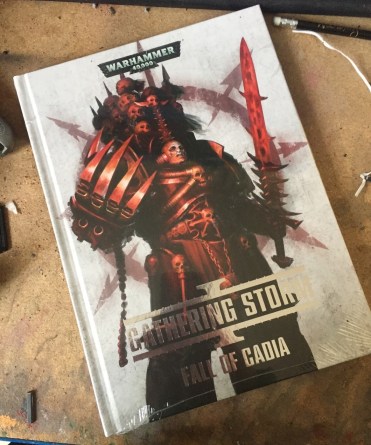
That’s me done with Rhinos for a little while at least. Bigger fish to fry. Well, one bigger fish anyway. That has taken up a lot of liquid green stuff – but more about that later. In the meantime, I hope you’re enjoying the Gathering Storm as much as I am (you have no idea how much I want to talk about it but I’m going to wait so as to not give away spoilers). Lots to look forward to there. More on that, and my Blood Angels in the upcoming posts. Onwards!

I decided that my Blood Angels needed some wheels (well, cat tracks anyway) and so I’ve put together my first Rhino transport vehicle for them. And, as it happens, I’m pretty happy with it. What’s more, I learned a couple of lessons with this one, that I shall happily share with you here.
But before that, let’s talk inspiration. As you will know if you’ve been following the progress of this army, I’ve been using classic 2nd Ed Blood Angels as an inspiration for this army, and it’s no different here. I took the classic Rhino APC from the below image and updated it a bit, and did a fair bit of weathering too. See if you can spot some similarities.
![]()
Now obviously there are some differences – a lot of them really, but this was where my ideas started. The tactical arrows on the roof, the symbols on the front, the general colouring… this was in my head when the project kicked off.

So first lesson to impart; read the instruction that come in the box when assembling. I’ve put together many a rhino over the years, but with this kit, things are a little different. I of course charged into it thinking ‘I know how to do this!’ and then came a cropper when I went to go and put one of the side panels. It’s a lot easier if you do it the way they tell you in the instructions. Just so you know.
Second lesson; Mephiston Red spray is brilliant. A couple of thin coats of it, and you’ll have saved your brushes a lot of time. Heck, you’ll have even saved time with your airbrushes if you’re that way inclined. What’s more, with a slightly elevated angle, you get some great natural shadows in there. So glad I picked it up, and will definitely be using it again.

With this kit, I used a couple of extra bits as well. The pintle mounted heavy flamer (because you can never have too many flamers) comes from the FW upgrade clam pack, and that’s some etched brass on the front piece there. As with any FW kit, there’s a lot of swearing involved in assembly, and plenty of mould lines to clean up, but of course you also get an amazing looking miniature when all of that’s done. I much prefer this kit to the one you get from GW when it comes to looks and design.

I’m really happy with the weathering job here. Typhus Corrosion is a great pot of paint and appears all over this tank, but the effect I really like was required by using a couple of grey paints to give the lower parts of this vehicle a dusty look. I’ve used it on my dreadnoughts before now, and it fits in with the basing of my other minis, so it’s great for tying the army together.
Now, why didn’t I do the big white Blood Drops on the doors? A, the door teeth make that a bit difficult, and B, putting white paint onto a red surface is not easy. And by that stage, I’d done enough of it, as you can see from the picture below.

When I worked out that painting white onto red was difficult (which I always knew but we oft relearn this sort of lesson), it gave me a bit of idea. It would be plenty tough for the guys maintaining the armoury on a space marine ship as well. Especially if they’re constantly coming in and out of battle. Sure, the important vehicles would get perfect spray jobs, but rhinos? The workhorses? Maybe when all the paint was being retouched, it left marks, where the new paint was slightly different or applied too thinly or heavily. So I added this to my weathering plan and it worked really nicely I think. Breaks up the flat red surfaces a bit at least. Won’t be everyone’s cup of tea, but I like it.

And so I shall leave you with the back end of a rhino to look at. Don’t fret though – you’ll have a new front end to look at soon enough. Like the titles says, this is rhino ‘1’. The next one is primed and ready for a bit of attention so I shall get to work on that soon enough. For the time being, I hope you’ve enjoyed looking at this one, and I hope your own painting projects are going well. Onwards!


The Wider Galaxy


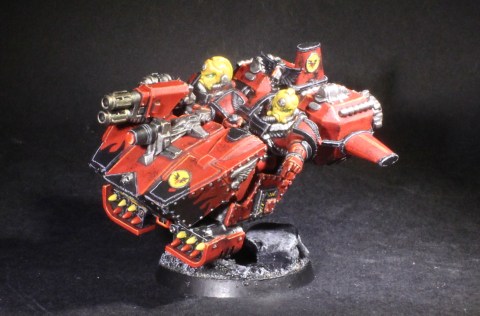
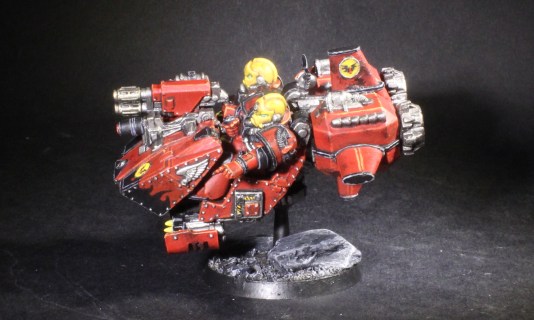
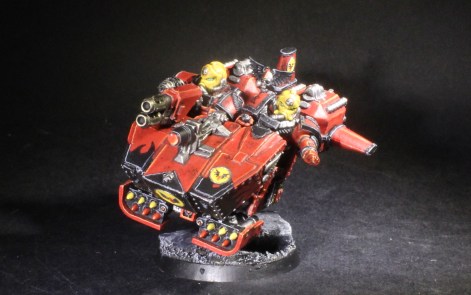
What weighs half a tonne, is made of metal and is a real pain to paint? My Blood Angels Land Speeder for my Horus Heresy/30K force, that’s what. It’s been really fun to work on this, but also a real struggle too because of, well, plenty of reasons that I’ll get to in a short while. Anyway, without further ado, let us take a closer look at the model that I’m calling ‘The Hammer’.

As you may well know, your 30k legion armies can take Land Speeder Javelins and they make an excellent addition to any force. The Forge World model looks amazing and you can take some real firepower with each one. I wanted to add one of these to my Blood Angels force as I felt I needed some Fast Attack, but, you see, there’s always been one type of Land Speeder that I’ve always wanted to paint and play with since I was a wee nipper and you’re looking at it.
I picked this up from Ebay for less than £15 (plus shipping) and I got a pretty good deal as it was missing its weapons – parts I wasn’t going to need anyway. I picked up the pintle mounted weapons set from Forge World for another project (as yet unstarted) and one of the Contemptor Dreadnought missile racks as well. These have given me a tank hunting speeder that can dash into the back lines and start taking apart some armour.

I also used an arm from a 40k space marine, an icon from the Blood Angels upgrade pack, some shoulder pads and some etched brass from Forge World to add some details to the kit. The old metal mini weighs so much that your wrist starts to hurt if you’ve been holding it for more than 5 minutes, but it’s also a little light on details, so these little embellishments helped to bring it up to snuff. They also added to the weight, so a wrist support was used at all times. Seriously, if anyone calls a Stormraven a ‘flying brick’ again, get them to pick up one of these.
I’ve named it the ‘Land Speeder Hammer’ as opposed to the Javelin and I like to think that it’s an experimental mark that the Blood Angels are testing out for the Mechanicum. Also, I’m pretty sure I could use it to bang a nail into a wall. And I’m not talking plaster – I’m talking brick.

So you might have noticed the flames. Yes, they are very cool. I’m really happy with the way they turned out and it really helps to make the model a little less bland. The yellow helmets were something that I ‘ummed’ and ‘aahed’ about for a little while, but they work so I’m glad I went in that direction. That being said, I hate painting yellow – it’s a knack I don’t have yet as I don’t get a lot of practice with it. I also painted the flying stand black. I hate the look of the clear plastic stands and this works fine for me. Will a truly elegant solution ever be found? Well, there’s that guy who used magnets to make his Eldar jetbike float but I don’t think there are any magnets strong enough to lift this thing.

There’s lots of light weathering too. Mainly because it fits in with the army and looks good, but also because it hides a lot of issues with the old metal. Weird lines, lumps and scratches. They don’t build them like they used to, and that’s a good thing. Although the old styling is still pretty boss.
I was reminded again that I hate painting metal minis. I love the nostalgia, but in practice, they’re a pain. When someone says ‘but if it’s got undercoat on it, isn’t it the same as painting plastic’ you may laugh in their face. The brush moves differently, the paint sits and dries differently, and details get lost fast. I’m really looking forward to working on a plastic mini next, and preferably not one with so many hard to reach spots. Half of the parts needed to be attached, detached and reattached all over again just so that I could get to everywhere that needed painting. Not fun. Long live plastic minis.

And etched brass can be a pain too. But even with all of that in mind, it was still great to finally paint one of these minis. I’ve wanted to paint one of these since I was a kid, and I actually love the blocky looks. And I’m thrilled with how the underslung missile pod looks – I love it when a plan comes together. Another childhood dream realised – always a nice feeling.

With that, I think I’m done for the year when it comes to Blood Angels. Well, at least when it comes to posting things up here. Let’s just say that I’ve been scrubbing a bit more resin lately. Anyway, I hope you like the Land Speeder – it really was great fun to see it come to life, even with all of its flaws.
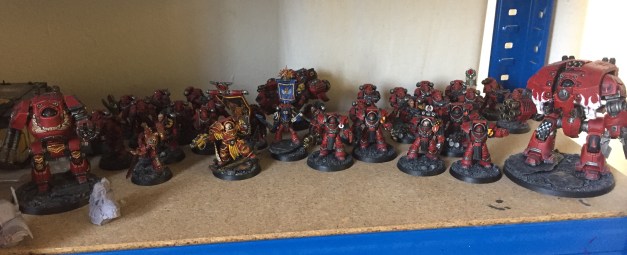
I thought I’d end this post with a group shot of all the Blood Angels I’ve done so far. These have all been done this year, and all of them have been shared here. More will come in 2017, so keep your eyes open for those. All that’s left to do is for me to wish you a very merry Christmas. Onwards!


This weekend, I picked up two awesome (and, I know I use that word a lot, but I really mean it this time) books that have made me super, super happy. Ecstatic even. The Traitor Legions book is fantastic and it’s given me a new lease of love for the Emperor’s Children and I’m very tempted to go overboard on my old favourite army again, but this isn’t the book I want to talk to you about. Everyone and their battle-brother has been pouring over this and discussing at length and anything I say here and now will be simple repetition. The book I want to talk to you about is Index Chaotica: Apocrypha, or, as I like to call it, All The Reasons I Became A Happy Heretic In One Book (Ok, their title is better).
So, what is this book? This is a huge slice of nostalgia, a history lesson, an art show, a miniatures showcase, a design guide and a fluff factory rolled into one. It will take you back in time to when Horus was just an ‘Imperial Commander’, to when the Iron Warriors were dedicated to Slaanesh (yup), to when there were more daemon engines than you could shake a power maul at, and to when artists had more freedom to really just let Chaos spew forth onto the page.

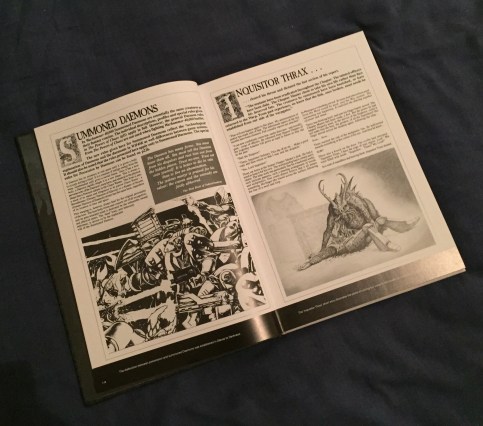
This book is a collection of Chaos-themed articles, images, illustrations, rules and stories from when 40k first began and its early years. With pages taken straight from Slaves To Darkness and The Lost And The Damned, we get to see the very origins of Chaos in the 41st millennium, and as the book moves on, we get to see how the stories, interpretations and illustrations of both the characters and the lore moved on. What’s more, they’ve pulled in some of the old fluff as well, and in the image above, is a real favourite of mine – the tale of Inquisitor Thrax. It’s a very short tale, but I remember reading it as a kid and getting goosebumps. And now I have it in this amazing book too!

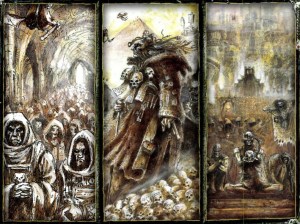
It’s fantastic to see how much the GW team have dug around in the archives for some of this content and the book has been put together exceptionally well. It flows faultlessly through the ages, the armies and the illustrative history of Chaos in the early years of Warhammer 40,000. And I love that they found the images above. Remember earlier when I mentioned the Iron Warriors being sworn to Slaanesh? Well, as you can see above, so were the Alpha Legion (and the EC of course). And opposite them on these beautiful colour plates, we have the legions dedicated to Khorne. I’ll leave you to work those out and go ‘huh’ or ‘eh!?’ for yourself.

Another real treat here is the inclusion of many of Jes Goodwin’s original designs for the Chaos Space Marines. Shown above are the Emperor’s Children, and the early sonic weaponry, but there’s a huge amount more in these pages too. I recently picked up Jes’ Eldar book as well, and just as with that, there are some brilliant little notes across all of these that show you the logic and uniqueness of each design. In the above example, there’s a note talking about how, due to their raiding tendencies, the Emperor’s Children have access to even modern Space Marine armour marks, and another talks about how they customise their armour too. You can get lost in these little tidbits – well, I can anyway.

And then there are the model shots. That’s not really what this book is about, and there aren’t too many in here, but when they do appear, your nostalgia bone breaks in half with excitement. I haven’t seen the above pages since they first appeared in White Dwarf and it’s a joy to see the Subjugators stride forth again. If only Forge World could make some of these… (hint, hint if any of you at FW are reading this). And yes, all of the Khorne Daemon engines are in there too, along with the Banelord, for anyone who remembers that amazing mini. They’ve just ticked all of the boxes with this book, and even though I’ve been flicking through it endlessly since Saturday, I’m still finding things in there that make me smile. A wicked, terrible, teeth-baring smile.

And just to top it all off, there are rules too. Lots of them. You can see all the old profiles and stat lines, alongside some of those favourite illustrations and fluff-pieces. It’s just great. There really isn’t anything bad to say about this book, except that I wish it was twice as long. Not that 140 odd pages isn’t enough – it’s a good sized tome – but I’m just greedy like that and perpetually want more.
Who is this book for? Anyone with a love for the Dark Gods. They all get a lot of coverage here and there’s plenty to dive into. If you’re interested in the history, or even if you want to relive it, this book is a must. It’s so much fun to read through this. That’s the word. Fun. From the incredible illustrations that have been done by people like John Blanche and Adrain Smith, to the stories, secrets and special characters who all have their origin stories included in one way or another, this is just a wonderful read.
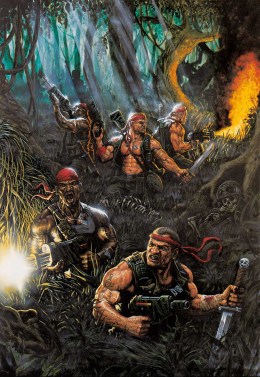
I’ll leave you with one of my favourite illustrations below (though it should also be mentioned, if you have a favourite old Chaos illustration, it’s almost certainly in here – there are so many!!), and just a final note to say that this is a great book. I can’t find anything to moan about. I can’t see a downside. Maybe Slaanesh has got to me, but this book gives me nothing but pleasure to read, and if you’re a fan of Chaos in Warhammer 40,000, you’re going to love it too. Onwards!